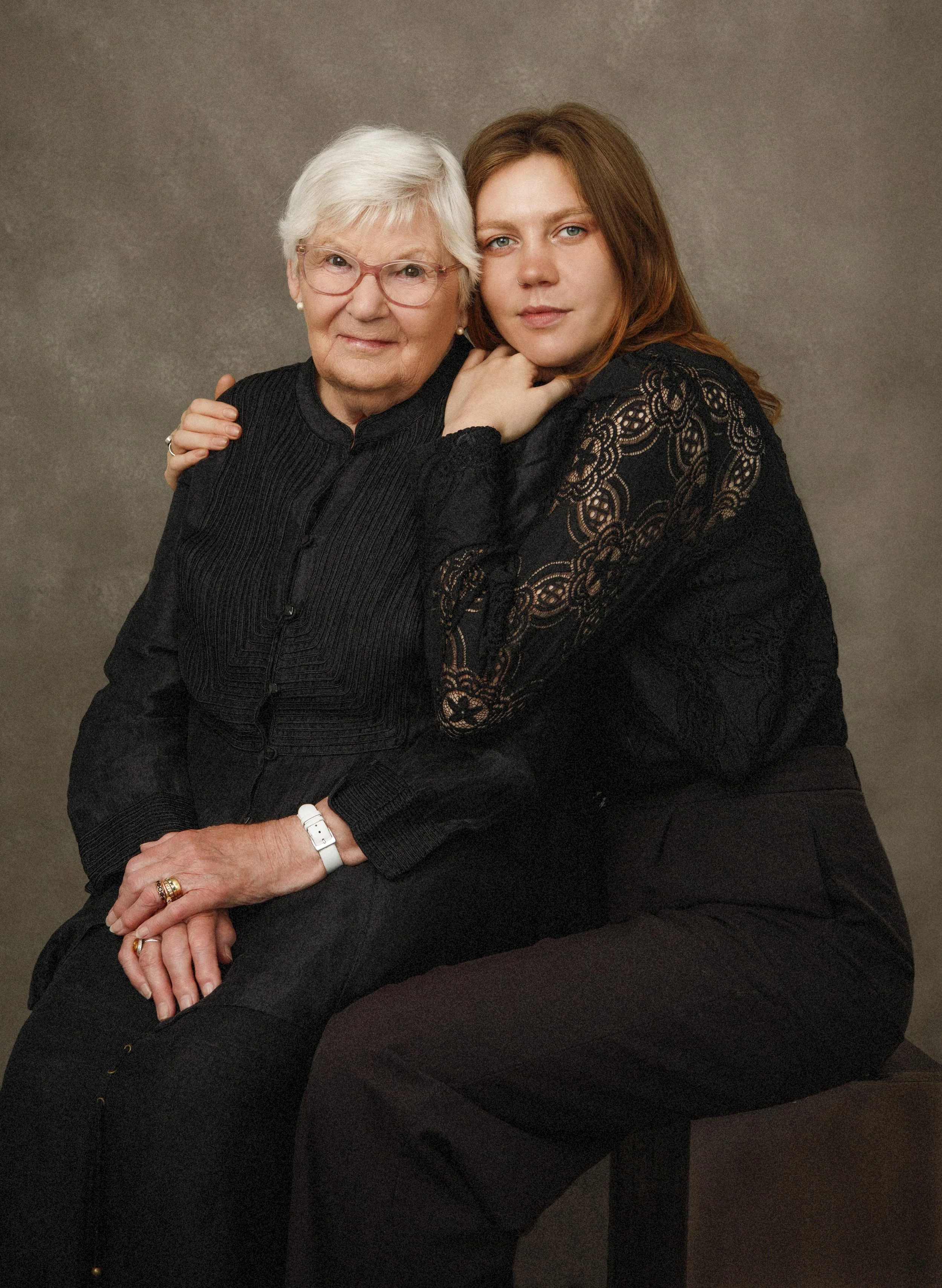
What we carry
A portrait study of family, identity and the things we carry forward.
Joy. Sarah. Eilidh.
Grandmother. Mother. Daughter.
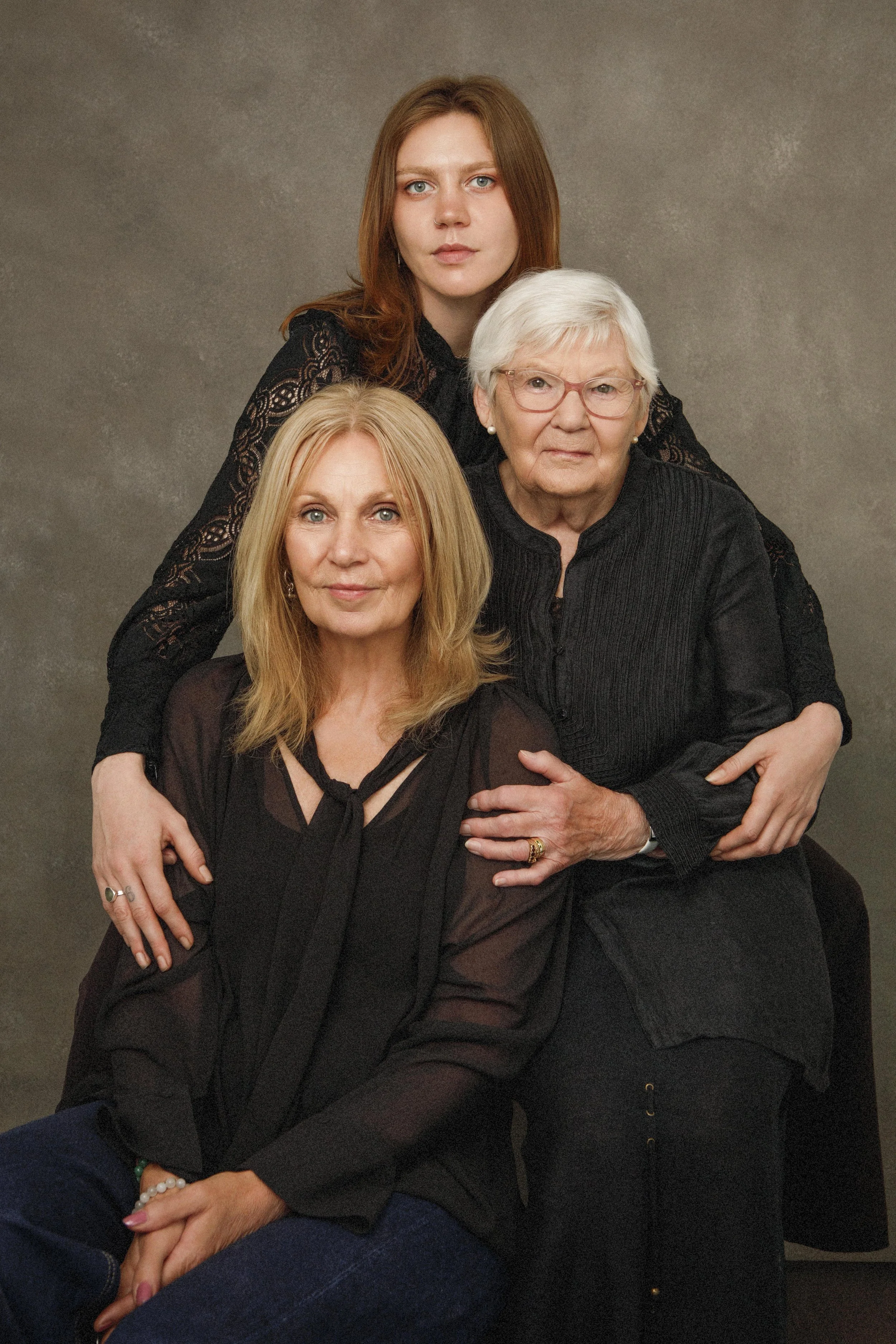
Three women at very different points in their lives, connected by something far more complex than resemblance.
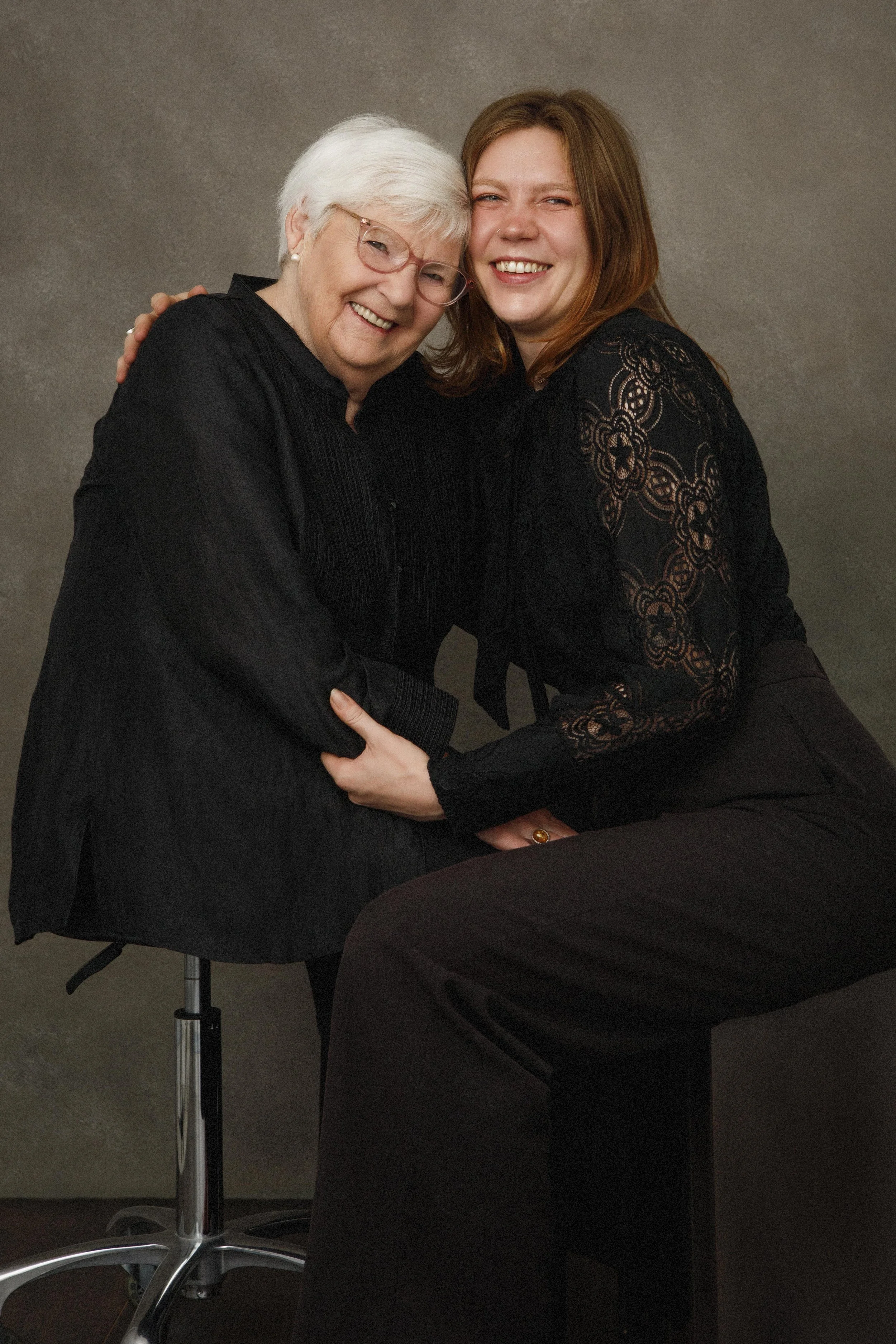
When Joy sat for this portrait, she was 88 years old.
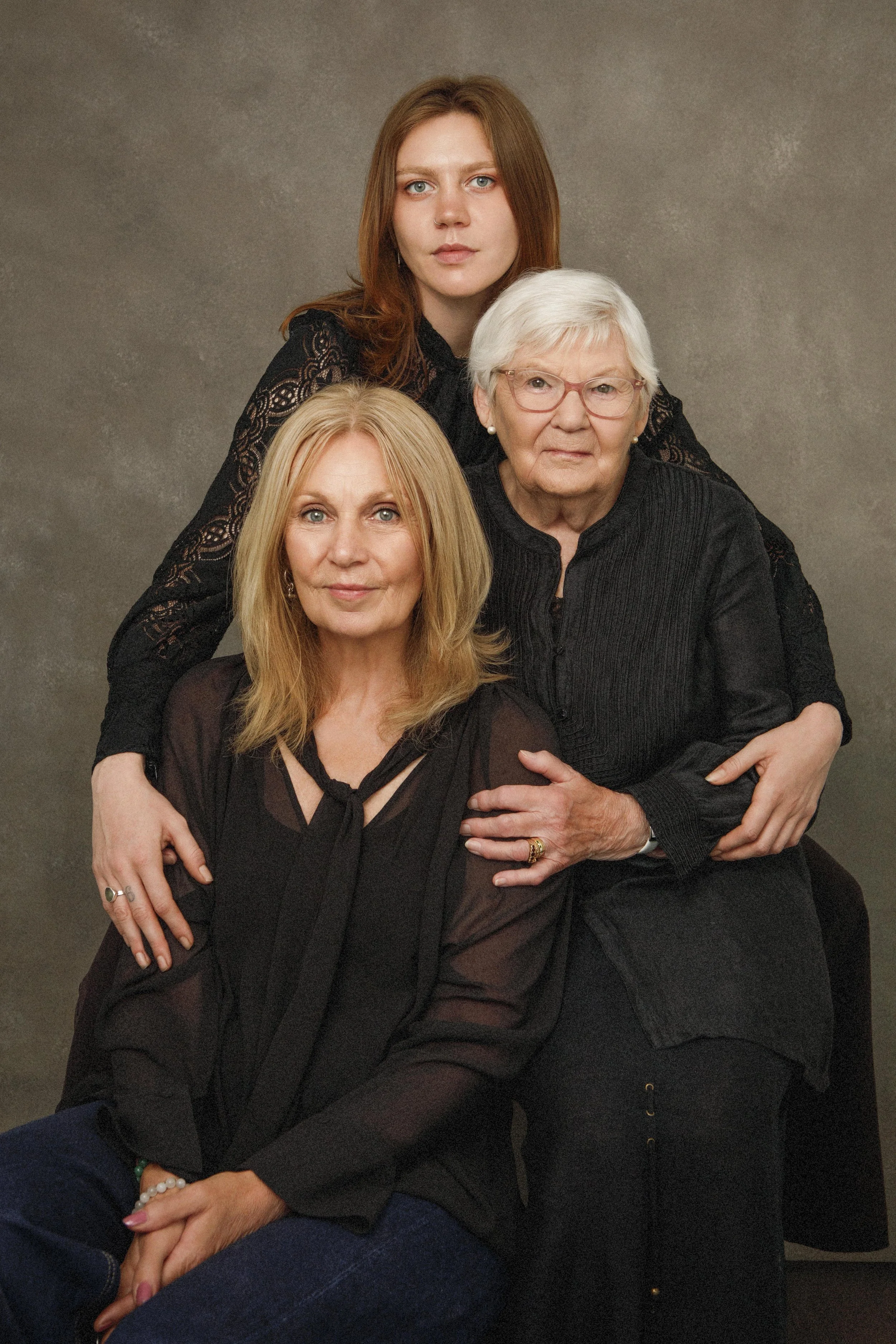
Beside her were her daughter, Sarah, and granddaughter, Eilidh, 27.
There are more than sixty years between the youngest and oldest women in this photograph. Lives shaped in different times, by different expectations and different experiences.
And yet, when they sit together, the distance between those generations seems remarkably small.
What passes from one generation to another?
We tend to think about inheritance as something tangible. Objects kept, photographs passed down, jewellery, letters, perhaps a familiar recipe written in someone's handwriting.
But much of what we inherit is less obvious.
A way of looking at the world.
A certain resilience.
The way we laugh. The things we notice. The values we hold. The gestures we make without realising where they came from.
Sometimes we recognise our parents in ourselves only after many years have passed.
And sometimes we see them appearing again in our children.
Sarah has spent much of her life surrounded by creativity. She is an art teacher, and her daughter Eilidh has followed her own creative path as an artist.
Whether that creative thread began with Joy is something I am looking forward to discovering when I speak with the three women more deeply.
Because GENERATION isn't really about establishing a family tree.
It is about discovering the things that travel through it.
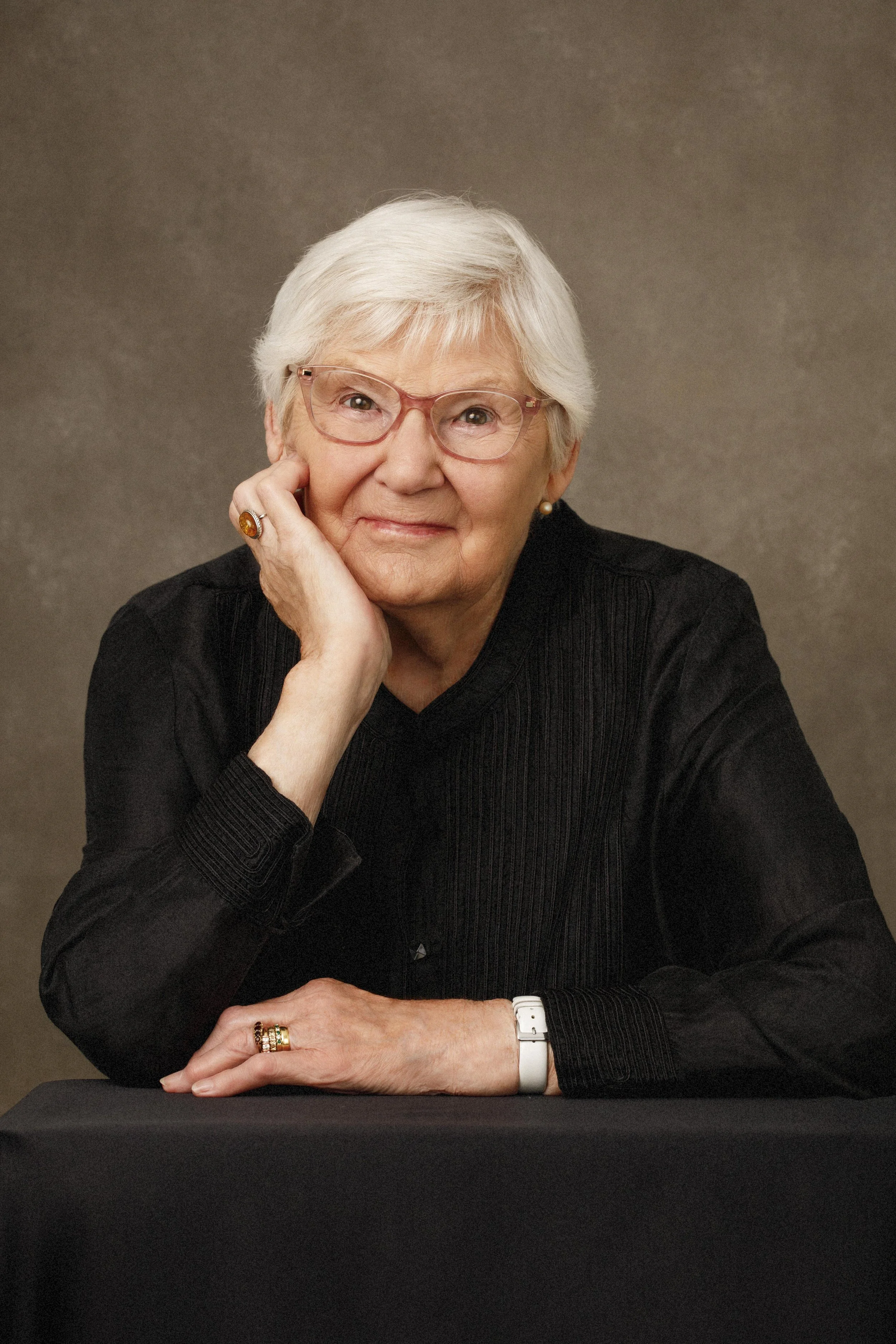
Joy
At 88, Joy sits at the centre of this story.
There is something extraordinary about reaching an age where your life exists not only in your own memories, but in the people who came after you.
A daughter grew up.
That daughter became a mother.
Her daughter became a woman in her own right.
And now all three can sit at the same table.
That is easy to take for granted while it is happening.
It shouldn't be.
I didn't want to photograph Joy simply as the eldest member of the family. I wanted her presence to matter.
Her hands, her face, the years visible within them — not things to disguise, but part of the portrait.
Eighty-eight years cannot be summarised in a photograph.
But they can be acknowledged.
The women
beside her
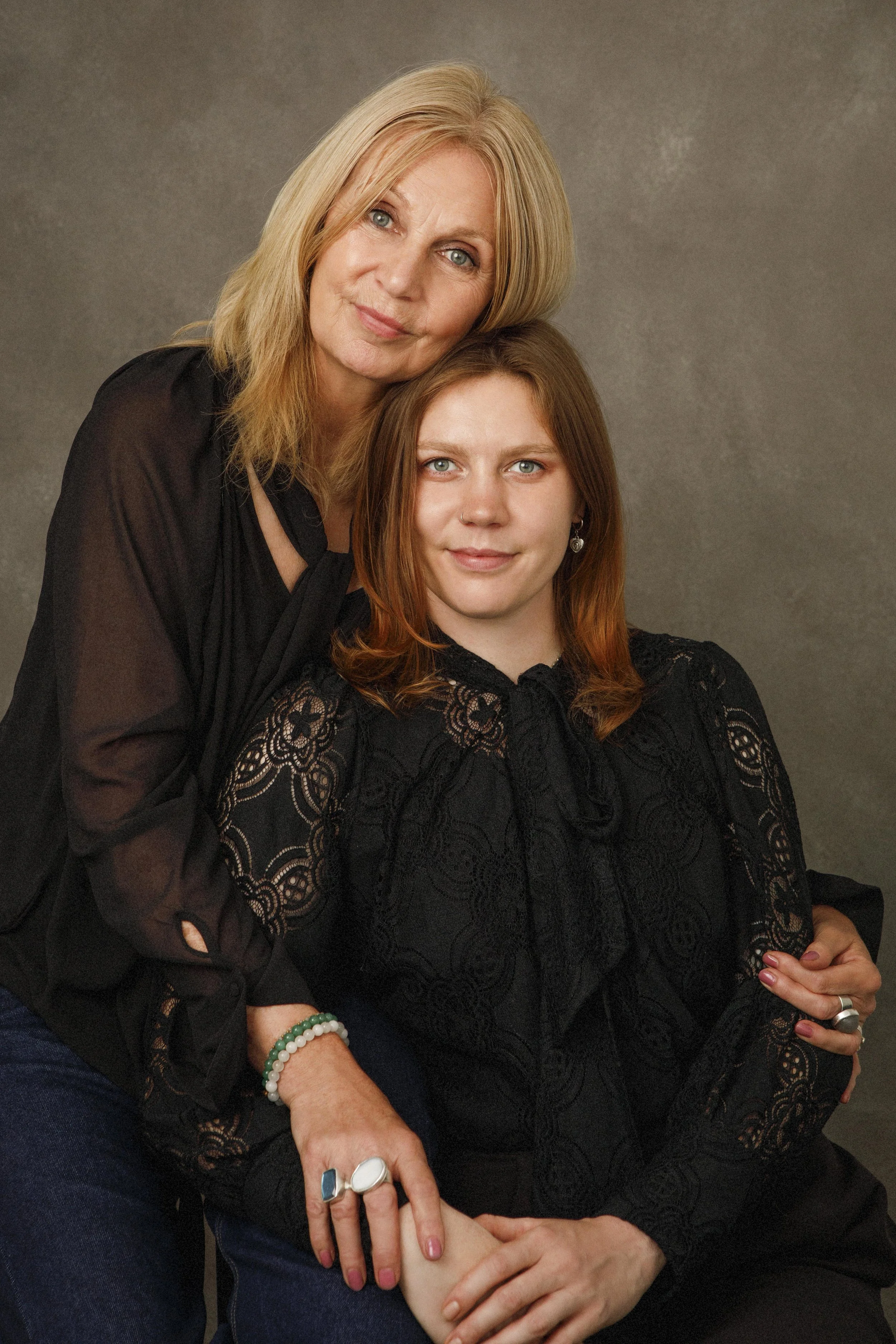
Sarah occupies an interesting place in this portrait.
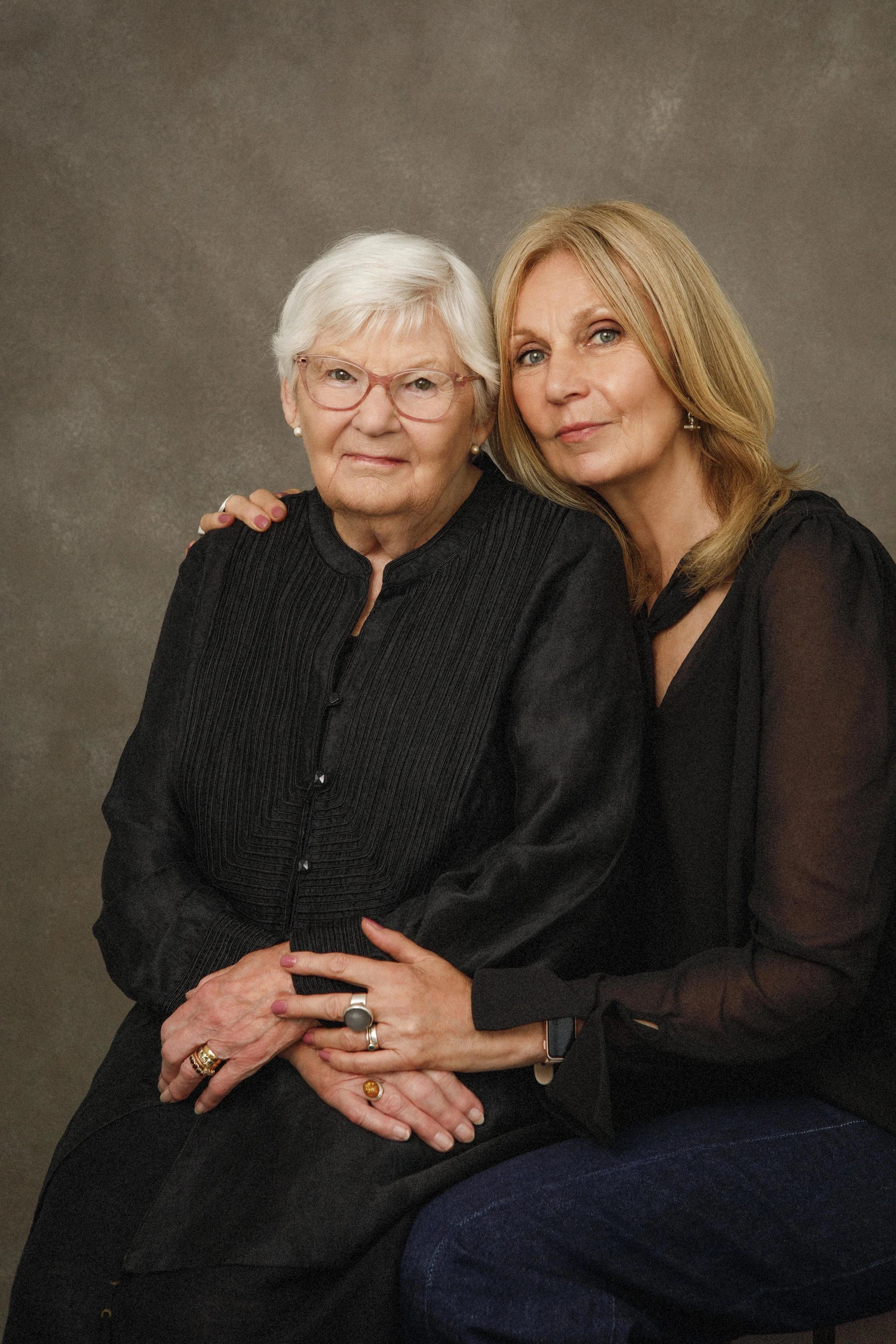
She is somebody's daughter and somebody's mother at the same time.
She can look in one direction and see where she came from, and in the other, see something of what continues after her.
And then there is Eilidh.
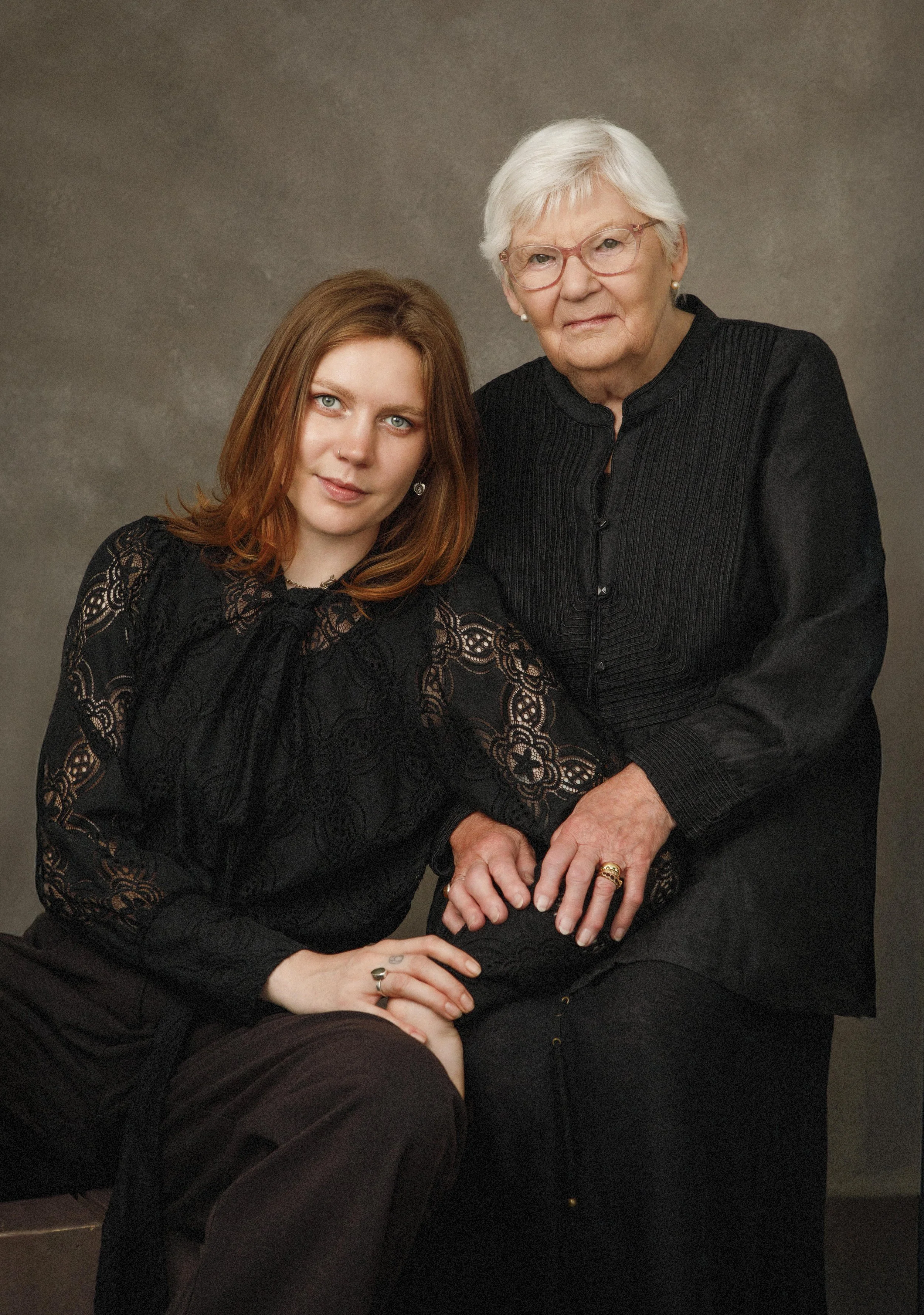
At 27, her life is at a very different point from her grandmother's. Yet she carries a family history that began long before she arrived.
Perhaps that is one of the peculiar things about generations.
We become part of stories we didn't witness.
We inherit memories that aren't ours.
And we carry pieces of people whose lives may have been completely different from our own.
More than resemblance
When I made this portrait, I was interested in more than whether the three women looked alike.
I wanted to see the relationship between them.
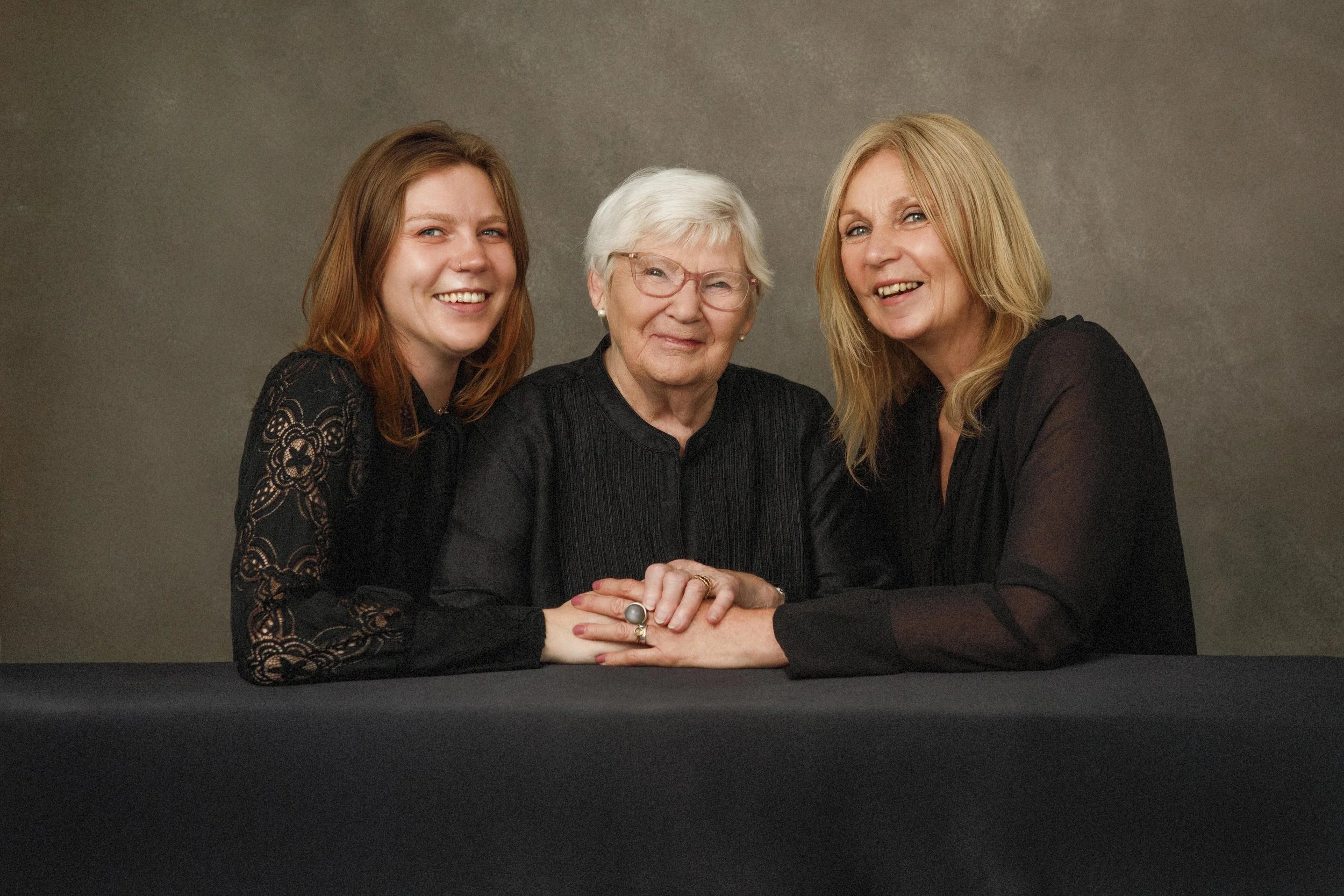
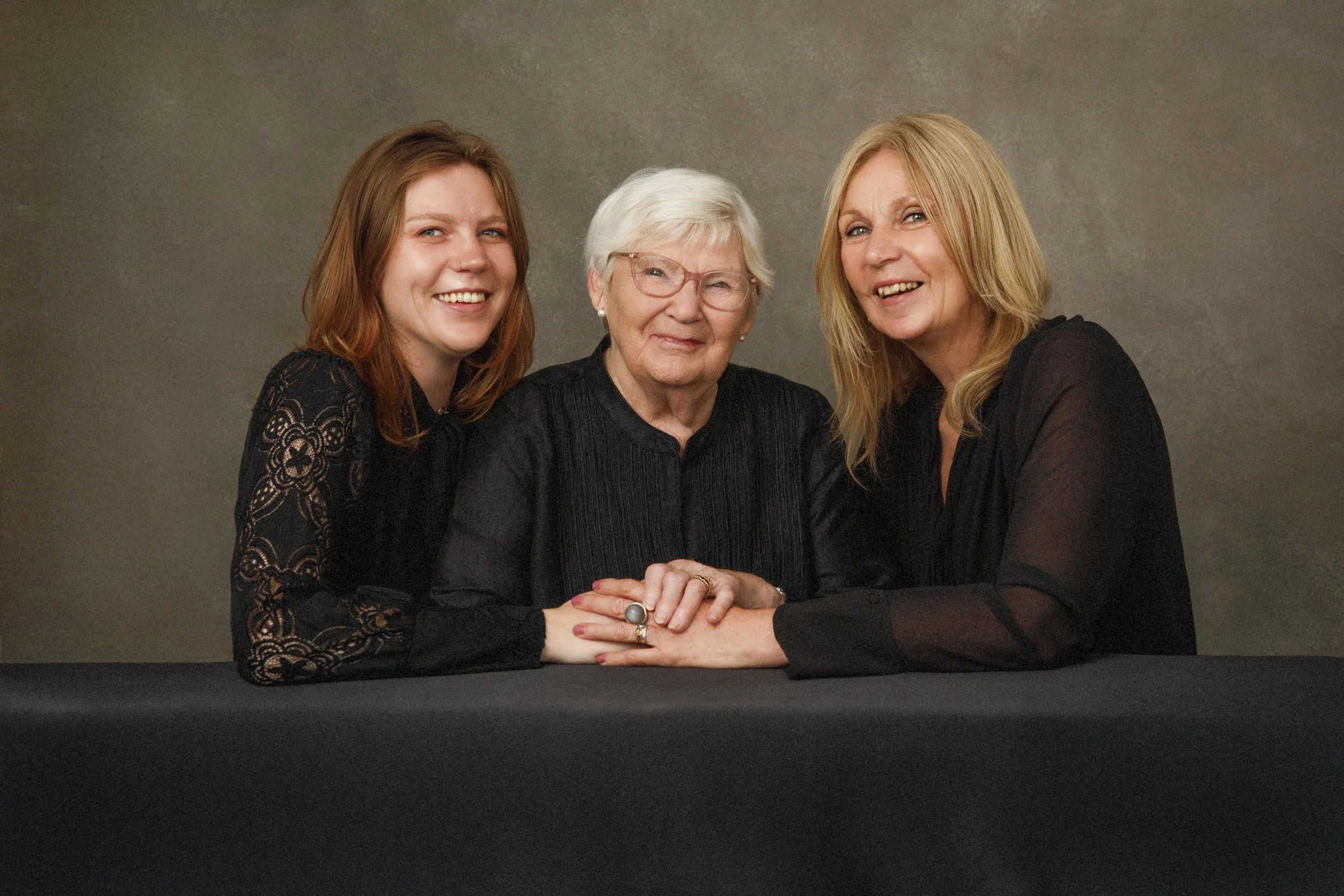
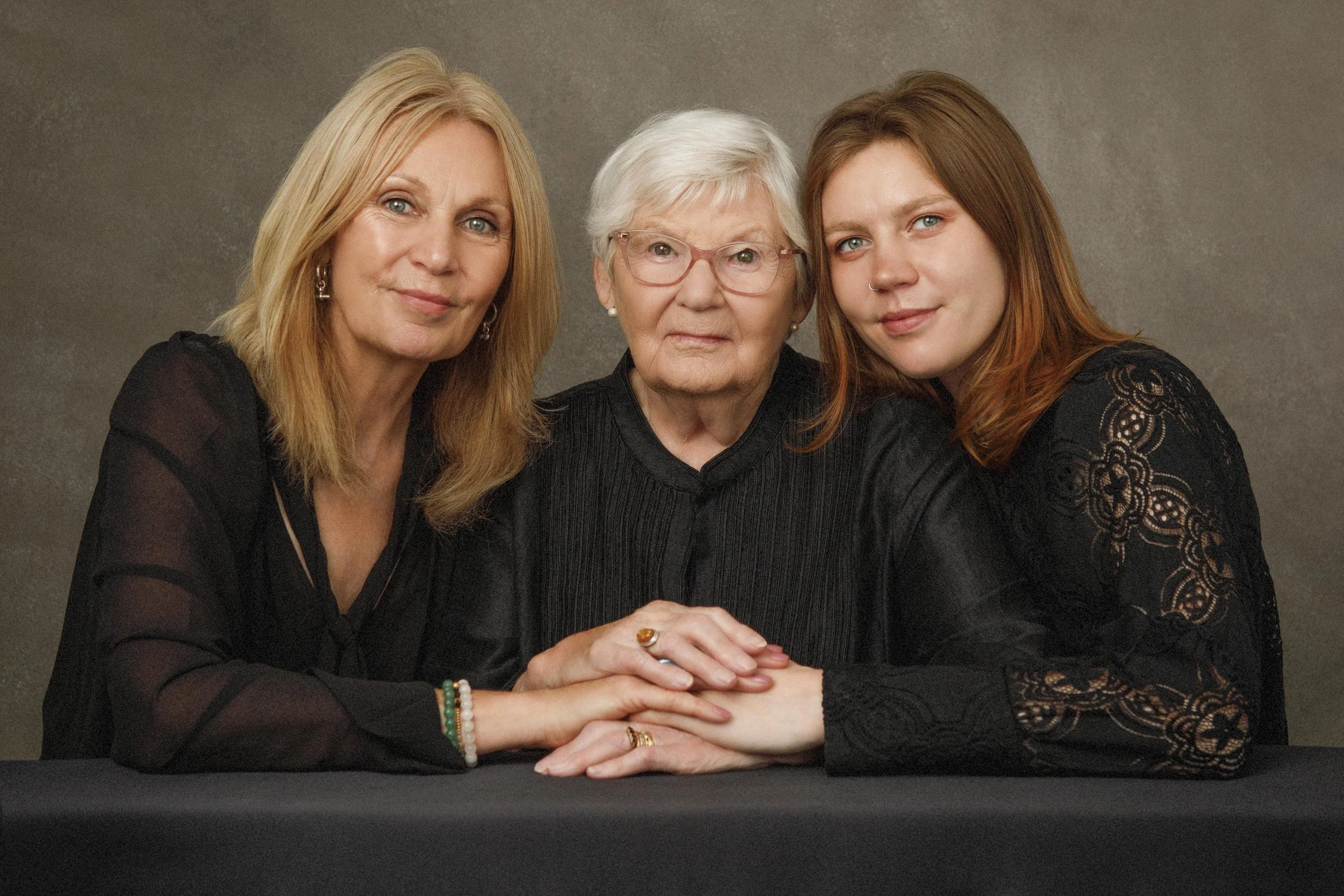
Three black dresses. One quiet background. Nothing competing for attention.
Joy in the centre.
Sarah and Eilidh beside her.
And their hands meeting across the table.
There is no need for anything more elaborate.
Because eventually the portrait becomes less about three individual women and more about the space between them.
Grandmother. Mother. Daughter.
One woman remembers her life.
Another stands somewhere in the middle of hers.
The youngest is still discovering where hers will lead.
For one brief moment, those three timelines exist together in a single photograph.
What we carry
I don't yet know what Joy will tell me when we sit down to talk.
I want to know who she was before she became Mum, and later Grandma.
I want to know what mattered to her when she was young.
I want to ask Sarah what she recognises of her mother in herself.
And I want to ask Eilidh what she believes she carries from the two women who came before her.
Perhaps they will talk about creativity.
Perhaps about family.
Perhaps about things I could never discover simply by looking at them.
That is the part of portraiture that interests me most.
The photograph can show us a face.
The conversation tells us whose face we are looking at.
And perhaps that is what GENERATION is ultimately about.
Not simply preserving what three women looked like at this moment in their lives.
But asking a much more interesting question:
What do we leave in the people who come after us?
GENERATION
A portrait study of family, identity and the things we carry forward.
Joy, Sarah & Eilidh
Three generations, photographed together in East Lothian, Scotland.